Los Angeles Home Architecture Styles and How They Live
What if the style of your next Los Angeles home could quietly shape your daily routine, from morning light to how you host friends? In LA, it often does. With so many eras and looks across the city, it helps to know how each style actually lives and what to expect if you plan to renovate. In this guide, you’ll learn the feel of LA’s most common home styles, the rules that shape what you can change, and practical tips to match a house to your lifestyle. Let’s dive in.
Los Angeles is a mix of eras, which is why you can tour a Victorian on one block and a glassy mid‑century around the corner. Spanish and Mediterranean Revival homes from the 1910s–1930s remain city icons, as seen in preserved examples like the Los Altos Apartments. You will also find early 20th‑century Craftsman bungalows and bungalow courts that shaped porch culture across the region, documented in this LAist history of bungalows.
Many neighborhoods lean into a visual identity. Some pockets highlight porch life and modest footprints, while others center on patios, pools, and glass walls. This variety is a gift if you know what to look for and a hurdle if you do not. A little style fluency helps you buy with confidence.
Before you fall for a façade, know the local rules that affect changes and additions. These can impact cost, timing, and design.
Historic Preservation Overlay Zones (HPOZs) cover many older neighborhoods. In an HPOZ, all exterior work is reviewed against district guidelines, and some projects go before a board. Check HPOZ status early because it can influence windows, doors, rooflines, and visible additions. Review the city’s overview and Preservation Plans on Los Angeles City Planning’s HPOZ page.
Zoning rules set height, setbacks, and how much floor area you can add. In many single‑family R1 areas outside special zones, a commonly cited baseline floor‑area ratio is 0.45, with local variation zones altering details. If you are thinking about a second story or a large addition, start with the R1 zoning section of the municipal code to gauge what is feasible.
Accessory Dwelling Units are one of LA’s most popular ways to add living space and potential income. State and local rules streamline approvals and often waive parking near transit or for garage conversions. Still, utility connections, municipal fees, and possible rent‑stabilization considerations can apply. Get current steps and checklists on the LA Housing Department’s ADU guidance page.
Earthquake retrofits are a smart budget line for older homes. Mandatory soft‑story rules apply to many multi‑unit buildings, while most single‑family upgrades are voluntary. Grants can help. The Earthquake Brace & Bolt program offers funding for eligible houses in select ZIP codes. See current program details on the CRMP Earthquake Brace & Bolt page.
If you plan to replace HVAC, water heaters, or kitchen appliances, electrification incentives can change your math. LADWP runs programs and pilots that support heat pumps, all‑electric upgrades, and related system improvements. Explore current options on LADWP’s HOME LA and residential incentives page.
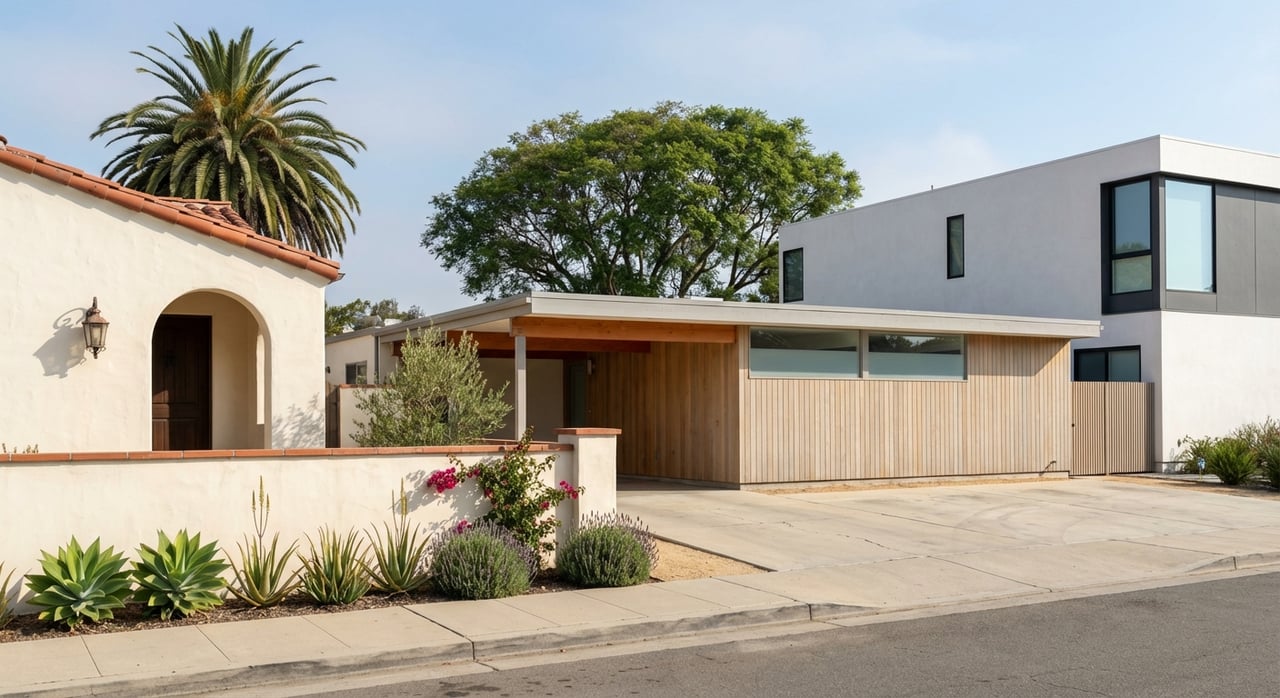
Stucco walls, red clay tile roofs, arched entries, and decorative tile and ironwork define these 1910s–1930s homes. Many have private courtyards or covered patios that act like outdoor rooms. Interiors feel sun‑kissed but calm, thanks to thicker walls and recessed windows that soften direct light.
If you love indoor‑outdoor privacy, these homes shine. Courtyards and loggias offer shade and breezes for nearly year‑round use. Main living rooms may get gentler daylight rather than full sun, which many find comfortable during hotter months.
Preserving original tile, plaster, and ironwork is often a priority, especially in HPOZ areas. Expect plumbing and wiring updates in vintage examples. If you want to add space or an ADU, a side yard or rear courtyard can work with careful design that respects the home’s character and local guidelines.
Low‑slung rooflines, generous front porches, exposed rafters, and built‑ins like bookcases and window seats. Many LA bungalow courts amplify this feel with shared garden paths and compact, human‑scale homes. For more context, see the LAist overview of bungalow history.
Bungalows feel warm and connected to the street. Porches are a second living room for morning coffee or evening chats. Interiors are cozy and well‑detailed, with rooms that flow but usually feel more intimate than a large open plan.
Opening the kitchen to the living or dining area is a common request. Keep or carefully relocate original millwork because buyers value it and it is costly to replicate. If the property is part of a bungalow court or in a conservation district, plan ahead for review when adding or reconfiguring outdoor space.
Late 1800s grandeur with steep roofs, intricate trim, towers or turrets, and tall bay windows. For a visual snapshot of this era, explore the preserved homes along Carroll Avenue in Angelino Heights in this LA Weekly photo tour.
High ceilings and tall windows create dramatic light and shadow. Floor plans feel more compartmentalized than modern layouts, which some buyers love for privacy and defined rooms.
Expect a focus on kitchen and bath modernization, plus possible foundation, plumbing, and electrical updates. Exterior paint, windows, and trim may be protected in certain districts. Budget time and resources for detailed carpentry and inspections that look for wood rot or termite damage.
From the 1940s–1960s, these homes favor simple lines, open plans, and walls of glass that connect living spaces to patios, courtyards, and views. LA’s legacy includes icons like the Eames House, detailed on the Eames Foundation site.
You get abundant daylight and a seamless indoor‑outdoor flow. These homes are ideal if you entertain or want the yard to function as another room. On urban lots, be mindful of privacy and summer heat gain through large windows.
Plan for energy upgrades. High‑performance glazing, shading, and zoned HVAC can keep the glassy look without sacrificing comfort. Many mid‑century homes also benefit from seismic bracing and mechanical updates, which are common priorities in LA.
Post‑WWII ranch houses are often single story with L‑ or U‑shaped footprints, attached garages, and big backyards. Plans tend to be informal and centered on the kitchen, patio, and pool.
Single‑level circulation, easy yard access, and relaxed living define the experience. If you value a private backyard and simple daily flow, a ranch can be a natural fit.
Many owners update finishes, enlarge kitchens, or add a primary suite. Second stories can be possible on the right lot and zoning, but massing and street presence matter. Check R1 rules and local variation zones early to avoid design dead ends.
Late 1990s to today, you will see open interiors, modern glazing, and flexible floor plans. On tight lots, rooftop decks create usable outdoor space when yards are smaller. City policies for small‑lot subdivisions and infill shape many of these forms. For context, review LA City Planning’s housing initiatives.
You get bright spaces, efficient systems, and a low‑maintenance feel. Yards may be modest, but roof terraces and balconies deliver outdoor living with views.
Newer homes are often simpler to electrify and insulate. If you plan a new build or major addition, factor in permit timelines and coordinate early with LADBS and planning.
Use this quick guide to match how you live with what a style naturally offers:
A few practical moves can save you time and money:
Ready to find a home that truly fits how you live? For tailored guidance across Southern California, from character homes to modern builds, connect with Karean Wrightson to explore options and next steps.
"We have bought and sold more than nine personal residences ... in addition to many pieces of income property... you have become our favorite real estate expert out of an impressive line-up from the past. "