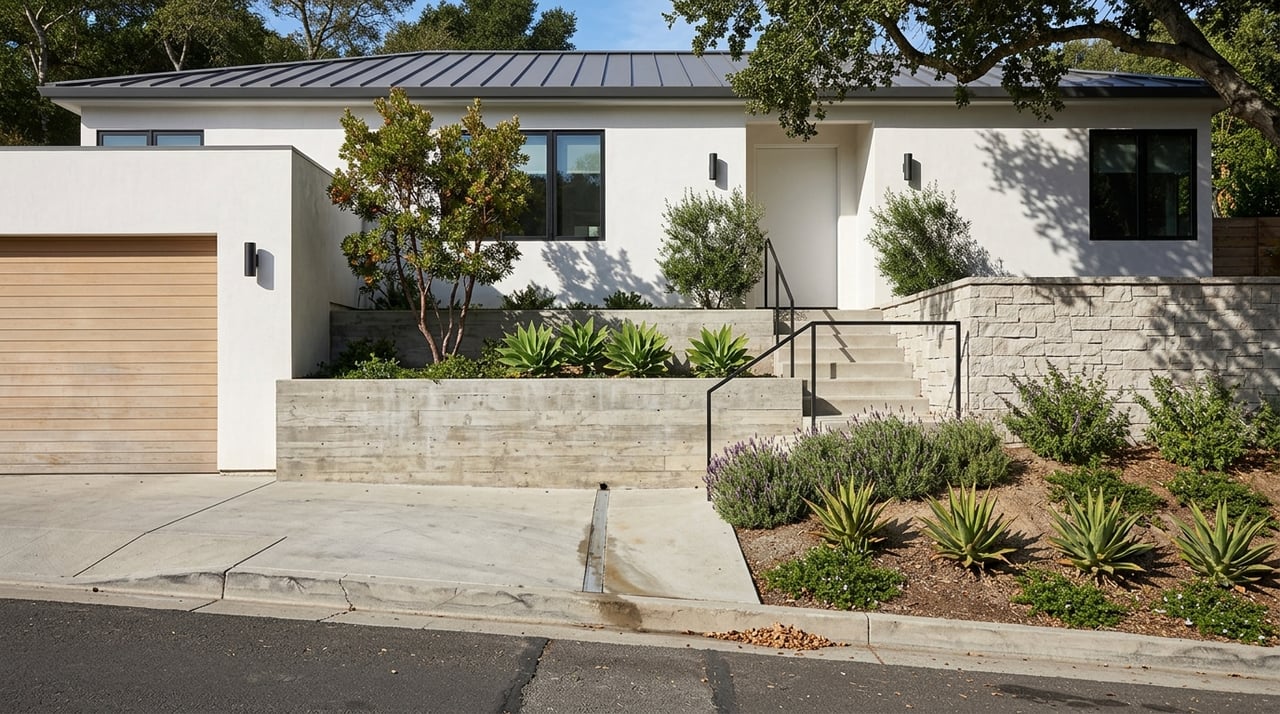
What Hillside Living in Los Angeles Really Feels Like
Ever wonder what daily life really feels like when your Los Angeles address sits above the flats? Hillside and canyon neighborhoods can look dreamy from a distance, but living there is about more than the view. If you are thinking about buying, selling, or simply comparing lifestyle options, this guide will help you understand the rhythms, tradeoffs, and everyday perks that come with LA hill living. Let’s dive in.
One of the biggest differences in hillside and canyon neighborhoods is the street pattern itself. The City of Los Angeles describes hillside streets as narrow and winding, with different categories such as collector, local, standard, and limited streets. In many hillside areas, parking may be allowed on only one side of the street, and operating speeds are generally lower than in flatter parts of the city.
That changes how everyday life feels. Instead of a simple grid, your routine can become more route-based, with a little more thought going into how you get home, where visitors park, and how deliveries arrive. It often feels quieter and more tucked away, but it also rewards planning.
The hillside lifestyle is not limited to the most famous canyon enclaves, either. Los Angeles planning guidance points to areas like Silver Lake and Echo Park as hillside communities too, which shows how broad this living experience can be across the city.
Parking tends to play a bigger role in hillside neighborhoods than many buyers expect. Los Angeles uses preferential parking districts in some high-demand areas, and LADOT notes that posted areas may require a valid permit to avoid citation risk.
In practical terms, that means curb space can be part of your daily strategy. On narrower streets, guest parking may need advance thought, and households often pay closer attention to posted signs and street-specific rules. If you love to host, this is one of the most useful lifestyle details to understand upfront.
That does not make hill living inconvenient by default. It simply means the tradeoff is more intentional access in exchange for a setting that often feels more private, elevated, and visually distinct.
If you have spent time in different parts of Los Angeles on the same day, you already know the weather does not always feel identical from one area to the next. NOAA’s Southern California weather guidance explains that the marine layer is common in late spring and early summer, creating cool, foggy conditions often known as “May Gray” and “June Gloom.”
That same weather pattern can affect foothills, mountain slopes, and passes differently than flatter inland areas. In hillside and canyon neighborhoods, that can mean morning cloud cover, filtered light, and a slower start to the day before the sun breaks through.
Later on, some locations may warm faster once the marine layer lifts. The result is not a dramatic climate shift from one street to the next, but it can make a hillside address feel like its own small weather pocket. For many residents, that subtle variation becomes part of the charm.
In Los Angeles, elevation changes how you experience the city. The Getty Center is one of the clearest examples. Set on a hilltop in the Santa Monica Mountains, it offers panoramic views that stretch from the Pacific Ocean to the San Gabriel Mountains.
That sense of outlook is part of what draws people to hillside homes. Even when your property is not on a museum-like perch, the simple experience of looking out over trees, rooftops, canyon walls, or long city-light views can shape how home feels.
It is also why everyday moments can feel a little more cinematic. Morning coffee, sunset, and even the drive home may carry a stronger sense of place when elevation is part of the setting.
Some hillside and canyon neighborhoods feel especially cohesive, and there is a reason for that. Los Angeles has Historic Preservation Overlay Zones, or HPOZs, for neighborhoods with distinct architectural and cultural resources. In designated districts, exterior alterations and additions are reviewed to help preserve that character.
For you as a buyer or seller, this helps explain why some hillside areas feel visually consistent and historically rooted rather than simply upscale. The appeal often comes from a combination of topography, architecture, and long-established neighborhood identity.
That kind of character can be a meaningful part of value and lifestyle. It creates a setting that feels curated by history as much as by design.
A common misconception is that hillside living feels isolated from the rest of Los Angeles. In reality, many of these neighborhoods are closely tied to some of the city’s best outdoor destinations.
Griffith Park is a strong example. The City describes it as more than 4,210 acres with hiking trails, horseback riding trails, picnic areas, fitness zones, and major cultural destinations including the Griffith Observatory, the Los Angeles Zoo, and the Greek Theatre.
That mix matters. It means your outdoor options are not limited to a quick neighborhood walk. Depending on where you live, your version of everyday recreation might include trails, broad parkland, or a cultural outing in the same general zone.
Hillside life in Los Angeles is not separate from dining and culture. It is just organized a little differently. Instead of relying only on flat-grid convenience, many outings center around destination-style places that are part of the experience from the moment you arrive.
The Getty Center is a good example again, not just for its views but also for its on-site cafes, coffee carts, and full-service restaurant. The Hollywood Bowl adds another layer, with its hillside setting, park grounds, hideaways, and picnic areas helping make an evening out feel more immersive.
That is one of the overlooked strengths of hillside living. You may trade some simplicity in daily circulation, but you stay connected to some of Los Angeles’ most memorable cultural and outdoor anchors.
Many buyers are drawn to hillside and canyon neighborhoods because they want a quieter, more tucked-away feel. In many cases, that is exactly what these areas offer. Narrower streets and less grid-like circulation can naturally reduce through-traffic and create a stronger sense of retreat.
At the same time, seclusion in Los Angeles is rarely the same as total remoteness. Many hillside neighborhoods still sit within reach of major parks, museums, dining destinations, and urban amenities. The feeling is often less about being far away and more about being slightly removed from the pace below.
That balance is a big part of the appeal. You get a setting that can feel private and elevated without giving up access to what makes Los Angeles dynamic.
If you had to sum up hillside and canyon living in one sentence, it would be this: you give up some flat-grid simplicity, but you gain atmosphere. The tradeoff often includes more attention to parking, guest access, and navigation.
In return, you may enjoy views, a stronger sense of privacy, subtle microclimate differences, architectural character, and proximity to destination-style outdoor and cultural spaces. For many buyers, that is more than worth it.
If you are comparing neighborhoods, it helps to look beyond the listing photos and ask how the street, setting, and access patterns will shape your daily routine. That is usually where the real answer lives.
Whether you are buying a home with elevation and outlook or preparing one for sale, lifestyle details matter. If you want thoughtful guidance on how a property’s setting influences value, presentation, and buyer appeal across Southern California, connect with Karean Wrightson.
"We have bought and sold more than nine personal residences ... in addition to many pieces of income property... you have become our favorite real estate expert out of an impressive line-up from the past. "