LA Transit Zoning: Which Single-Family Areas Changed?
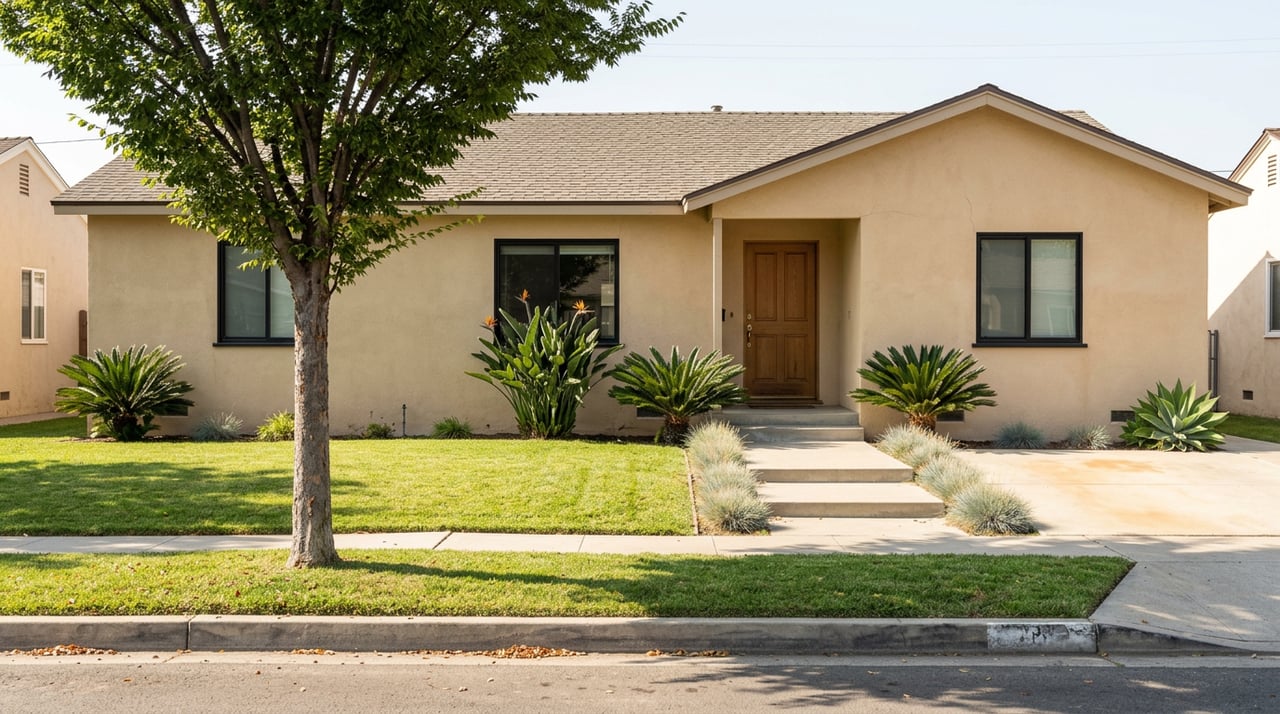
Drive two different residential streets in Los Angeles right now and you might not notice anything different about them. Both lined with single-family houses. Both zoned R1 on paper. Both listed by an agent using the same words: quiet, established, single-family. One of those streets sits inside a half-mile buffer around a Metro stop that the city just decided to treat differently. The other doesn't. Nothing about the houses tells you which is which. The zoning code does, and as of this summer, the zoning code has started saying two different things depending on where the tape measure lands.
If you've been comparing Los Angeles neighborhoods by scrolling median prices and reading "R1" on a listing sheet, you've been reading half the label. The other half changed on June 30, 2026, and it changed unevenly, block by block, around a specific and public list of transit stops.
The law behind this is Senate Bill 79, the Abundant and Affordable Homes Near Transit Act, signed by Governor Gavin Newsom on October 10, 2025, and effective statewide on July 1, 2026. It requires cities to allow denser housing within a half-mile of qualifying high-frequency transit stops, with the allowed density scaled to how good the transit is. Los Angeles City Council voted 8 to 5 to oppose the bill before it passed, citing concerns about losing local control over zoning decisions.
Once it passed anyway, the city went looking for the exit the law itself provided. SB 79 lets a jurisdiction delay full implementation if it can show its existing zoning already allows at least half of the housing the law would otherwise require near transit. Los Angeles took that option. In March 2026, the City Council directed staff to pursue a phased approach that pushes full citywide compliance out to roughly 2030, the year after the next state-mandated housing planning cycle begins.
That's the headline most people read: LA bought itself four more years. What that headline leaves out is that the same council motion that authorized the delay also authorized something to happen immediately. The city adopted a Low-Rise Ordinance alongside its Phased Implementation Ordinance, and both took effect on June 30, 2026, one day before the state deadline. The Low-Rise Ordinance expands an existing zoning tool called the Corridor Transition program to single-family and other low-density parcels, extending it to a half-mile buffer around a specific set of transit stations the city calls "high opportunity" areas.
The ordinance allows two-to-four story multifamily buildings at more than 50 station areas across the city, in places that were zoned exclusively for single-family homes the day before. This isn't hypothetical or pending state review. It's already the zoning at those specific addresses.
Coverage of the law has named several of the corridors already carrying the new rules: Hollywood, Lankershim, Wilshire, Crenshaw, and Atlantic boulevards. These are the corridors you'd expect to be first, since they're already served by the city's busiest rail and bus lines, the exact kind of high-frequency transit the law is built around.
The city didn't apply the new incentives everywhere inside those buffers, though. The Los Angeles Conservancy pushed for and won an exemption for Historic Preservation Overlay Zones and designated Historic-Cultural Monuments, meaning a block with a historic district designation keeps its existing protections even if it sits inside an otherwise-eligible station buffer. So a single half-mile radius around one station can contain parcels operating under three different rule sets: newly eligible for low-rise multifamily, exempted because of historic status, or untouched because the city's broader compliance date hasn't arrived yet.
Proximity, not price, is the operative variable here. An analysis by the transportation advocacy group Streets For All mapped the transit stops that trigger the law's full requirements once Los Angeles reaches its 2030 compliance deadline, and found a pair of bus stops on Wilshire near the Los Angeles Country Club that will eventually pull nearby single-family blocks in Holmby Hills, some of the most expensive residential real estate in the city, into the same upzoning framework as more modest neighborhoods. Land value doesn't buy an exemption. Distance from a bus stop does.
Splitting the law into an immediate slice and a delayed remainder wasn't an accident of process. It's what happens when a council needs to show the state it's serious about compliance without triggering the kind of political backlash that greeted an earlier state housing law allowing homeowners to add up to four units per lot, a law that drew lawsuits and one city's flirtation with declaring itself a mountain lion refuge rather than comply. Aaron Eckhouse, local policy programs director for California YIMBY, one of the organizations that sponsored the bill, put the city's posture this way in reporting on the implementation fight: the city was effectively saying it would do this on its own terms rather than the state's, while acknowledging the law was moving forward regardless because the state had forced the issue.
The split also reflects a real economic constraint, not just political maneuvering. Scott Epstein, policy and research director at Abundant Housing Los Angeles, a pro-development advocacy group, was blunt about whether upzoning alone guarantees new supply, telling reporters covering the ordinance rollout: "We're pretty concerned that this is not actually going to produce housing." His concern points to a mechanism worth understanding if you're pricing land in one of these buffers. Zoned capacity and built capacity aren't the same thing. A small lot that's now legally allowed to hold a four-unit building only gets one if the economics pencil, and in neighborhoods where land costs are already high, a modest two-to-four unit project can cost more to build per unit than the rents will support. Upzoning changes what's legally possible on a parcel. It doesn't automatically change what a builder can afford to build there.
For a buyer or an investor treating "Los Angeles" as one market to compare against other Southern California cities, none of this changes much. For someone comparing two specific streets, it changes the question you need to ask before you write an offer.
The old question was: what does the zoning say. The current question is: which of three categories does this specific parcel fall into. Is it inside one of the 50-plus station areas where the Low-Rise Ordinance already applies, meaning two-to-four story multifamily is legally buildable next door today. Is it inside a Historic Preservation Overlay Zone that exempts it from that incentive regardless of transit proximity. Or does it sit outside any qualifying half-mile buffer entirely, in which case the relevant date isn't June 2026, it's the city's 2030 compliance deadline, assuming the state accepts the phased plan as filed.
That third category covers most of the city's single-family stock for now, including large swaths of the San Fernando Valley and the Westside that fall outside the initial 50 station areas. When the fuller phase-in does arrive, the scale is not small. The Streets For All analysis estimated the San Fernando Valley alone could eventually see zoned capacity for around 500,000 additional housing units once the law phases in as scheduled, with the Westside adding roughly 100,000 more. Those numbers describe zoned capacity over the coming years, not construction happening this month, but they describe the trajectory a block outside today's 50 station areas is still on.
If you're evaluating a listing, the practical move is checking the parcel directly against the city's Zone Information and Map Access System rather than relying on the R1 label alone, since that system reflects the Low-Rise Ordinance boundaries as adopted. If you're holding land inside one of the immediate station areas, the entitlement question isn't whether upzoning happened. It already did. The question is whether a project actually pencils on that specific lot, which is a conversation worth having with someone who tracks these boundaries as they shift rather than assuming last year's zoning map still applies.
Does this affect what my current home is worth right now? Being inside one of the 50-plus station areas changes what's legally buildable on a lot, which can affect land value independent of the existing structure. Being outside those areas, or inside an HPOZ, means the near-term picture is closer to what the R1 label has always implied.
How do I find out if a specific address is inside one of the current buffers? The Zone Information and Map Access System is the city's own parcel-level tool and reflects the ordinance as adopted. A listing sheet or portal zoning tag won't show the June 2026 change.
Will single-family zoning eventually disappear everywhere in the city? Not automatically. The 2030 timeline depends on the state accepting the city's phased compliance plan, and even where it applies, HPOZs remain carved out. The city chose which levers to pull rather than adopting the law's default statewide standards wholesale.
Zoning maps used to be one of the more stable things in a real estate transaction. This one isn't, and the parcels where that matters most are the ones that still look, on the surface, exactly like they did last year. If you're weighing a purchase or a sale on a Los Angeles block and want someone to walk the specific parcel details with you rather than the neighborhood averages, Karean Wrightson offers a complimentary market consultation built around exactly this kind of block-level question.
"We have bought and sold more than nine personal residences ... in addition to many pieces of income property... you have become our favorite real estate expert out of an impressive line-up from the past. "